
Sound Technician
Hire a sound technician in Los Angeles
Staffed audio support for weddings, ceremonies, corporate programs, panels and live musicians — someone responsible for the sound from load-in to the last song.
The short answer
What a sound technician is for
A sound technician is the person responsible for your event sounding right — not the person who dropped off the speakers. Before doors they place and aim the system, set gain structure, ring out microphones so they do not feed back, and test every input. Through the event they ride levels as the room fills, manage microphone handoffs during speeches, and fix problems in seconds.
If nobody is speaking into a microphone, a well-placed rental may be enough. The moment there is a ceremony, a toast, a presentation or a live musician, the honest answer is that you want someone whose only job is the audio.
Who it is for
Events where staffed audio matters most
- Wedding ceremonies. Vows and an officiant carrying clearly to the back row, with microphones discreet enough not to sit in the photographs. See wedding production.
- Speeches and toasts. The highest-stakes two minutes of the night, and the moment an unattended system is most likely to embarrass everyone.
- Corporate programs, panels and presentations. A mic per speaker, clean laptop audio, Q&A handhelds. See corporate event production.
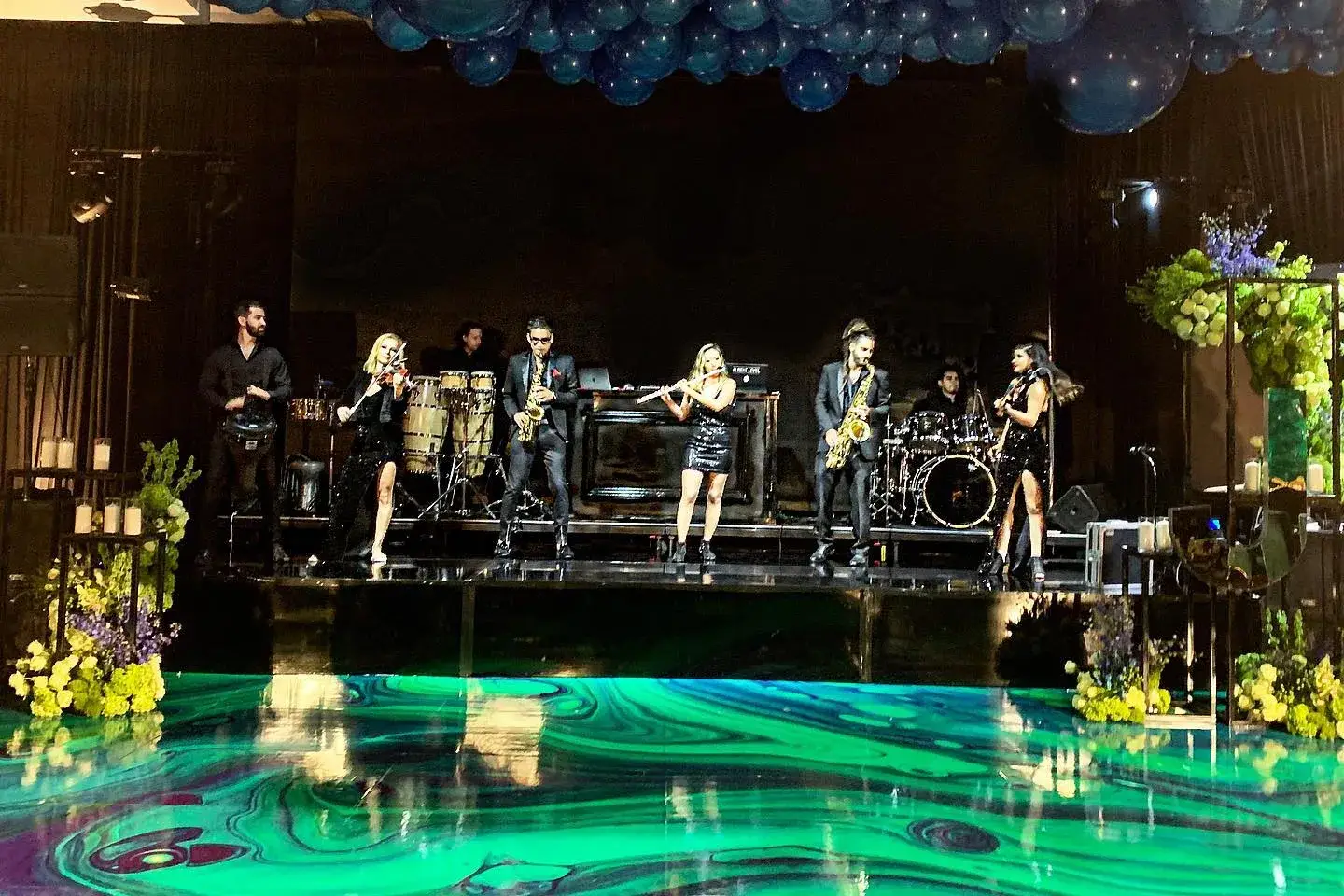
- Live musicians. Stage monitoring, direct inputs, and a mix that works when the night moves between a band and a DJ. See live musicians and singers.
- Mitzvah celebrations. Cantor or rabbi, family speakers, the d’var Torah and a DJ/MC all on the same system. See mitzvah production.
- Outdoor and estate events. No walls to contain the sound, wind across microphones, and power that needs assessing. See private estate events.
The work
What the job involves on the day
Speaker placement. Where the boxes go decides more about how an event sounds than how expensive they are. Aimed correctly, a system is loud where guests are standing and quiet at the property line — which matters in residential neighbourhoods with amplified-sound limits.
Gain staging and ringing out. Setting levels through the whole signal chain so there is headroom rather than distortion, and finding the frequencies that would feed back in that specific room before a guest finds them for you.
Frequency coordination. Wireless microphones share the radio spectrum with in-ear monitors, production intercoms and whatever is happening in the next ballroom. Coordinating them is a real technical step, and it is why professional systems do not cut out.
Microphone management. Knowing which mic is live, muting the ones that are not, and handing the right one to the right person at the right moment in the program.
Cable management and presentation. At a luxury event the rig is part of the room. Cable runs taped and hidden, stands dressed, nothing visible that does not need to be.
Backup and troubleshooting. Spare transmitters, receivers and cabling on site, already tested. The point of a technician is that the failure you never hear about was handled in four seconds.
Questions
Sound technician questions
What does a sound technician actually do at an event?
Before guests arrive: places and aims the speakers, sets gain structure, rings out the microphones so they do not feed back, and tests every input that will be used. During the event: rides levels as the room fills and empties, manages microphone handoffs during speeches, and fixes problems in seconds rather than minutes. The measure of a good one is that you never think about the sound.
Do I need a sound technician, or can I just rent speakers?
If nobody is speaking into a microphone, a well-placed rented system is often enough. The moment there is a ceremony, a toast, a presentation or a live musician, a technician stops being a luxury. Unattended systems fail in ways that are obvious to every guest and take an untrained person several minutes to diagnose — usually during the most important moment of the night.
How much does it cost to hire a sound man in Los Angeles?
It depends on the hours, the complexity of the system and whether equipment is included. We quote it per event rather than publishing an hourly rate, because a two-hour ceremony with two microphones and a ten-hour corporate program with a panel, a presentation feed and audience Q&A are not the same job.
Can you provide a technician for equipment we already have?
Sometimes, and we will be honest about when it is a bad idea. Operating an unfamiliar system with no spares and no documentation is a real risk, and if the equipment is not up to the room a technician cannot fix that. Tell us what you have and we will tell you whether we can stand behind the result.
Do you provide audio for live musicians and bands?
Yes. Live players need stage monitoring so they can hear themselves, direct inputs for instruments, and a mix that sits properly with a DJ if the night moves between the two. We also coordinate technical riders and input lists with musicians ahead of the date.
Can you handle sound for panels, presentations and conferences?
Yes. That means a mic per panellist rather than one shared handheld, frequency coordination so the wireless systems do not interfere, a clean feed from presentation laptops, and handheld microphones staged or walked for audience Q&A.
What happens if a microphone fails during a speech?
A spare is already on and tested, and the technician swaps it. That is the entire argument for having one. Backup transmitters, receivers and cabling travel with every staffed setup as standard practice.
Are you insured, and can you provide a COI to our venue?
Yes. We are fully insured and provide a certificate of insurance to any venue on request. Many Los Angeles venues require one from any outside audio crew before load-in.
Related
Popular event production searches
Request availability & quote
Your date, venue, guest count and what the program involves. We will tell you what the audio needs and whether a technician is the right call.